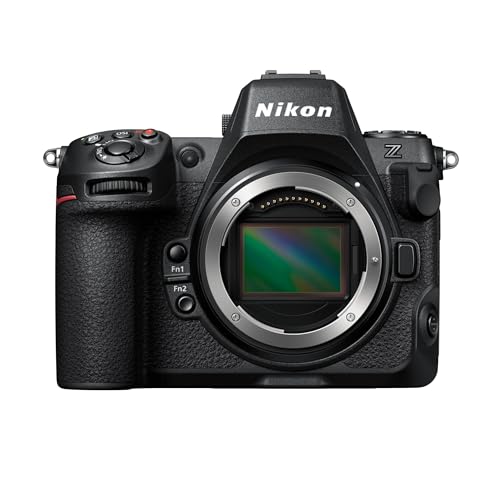
If you're reading this Canon R5 Mark II wildlife photography review, the first thing to know is that this body is built for reach and detail. Wildlife rarely stands still close to you, so the camera has to work well with long lenses, and the R5 Mark II is a full-frame mirrorless body made for exactly that kind of shooting.
Full-frame sensors give you a wider field of view at the same focal length as a crop body, so you can fit more of the scene around the animal. When you're cropping later, you also keep more detail to work with. For a bird on a far branch, that extra room can be the difference between a usable frame and a tiny speck in the corner.
If you already own Canon EF telephoto lenses, the Canon Mount Adapter EF - EOS R is the product to look at. It's listed for use with the R5 and other RF-mount bodies, so you can keep using your existing glass while you switch systems. Check the adapter's listing and your lens model before you buy, because some lenses need firmware or are better suited to a different setup.
For new lenses, look for a Canon telephoto zoom made for EOS cameras. Zooms are handy in the field because animals move closer and farther away, and you won't always get a second chance to change lenses. Think about how much reach you need, how heavy the setup will be on your walks, and whether you need a lens that works in low light at dawn and dusk.
Be careful around wildlife. Keep a respectful distance, never approach nesting birds or young animals, and don't bait or chase anything for a shot. Many parks and reserves have their own rules about photography, drones, and off-trail walking, so check those before you head out.
Autofocus Performance on Moving Animals
The R5 II tracks at 30fps with full AF, and that matters for autofocus on moving animals because the focus system has to keep up with a subject that won't hold still. Canon's autofocus on this body can track subjects, and it's built around detecting animals, birds, and people. Check the maker's manual for the exact list of subjects the body can detect, since that list can change with firmware.
Here's a simple way to set it up before you go out:
- Turn on subject detection and pick the animal or bird setting in the menu.
- Use a single focus point or a small zone for a slow animal, and a wider zone for fast or erratic ones.
- Set the focus mode to continuous autofocus so the camera keeps adjusting while the animal moves.
- Half-press the shutter to lock focus early, then wait for the animal to reach the spot you want.
Tracking works best when you practice with the same subject before the real shoot. Try following a bird at a backyard feeder or a dog on a walk. Notice where the camera grabs focus first and whether it jumps to the background. If it jumps, switch to a smaller zone or pick the eye setting, if your body offers it, and try again. Your hands will learn the rhythm faster than any menu will explain it.
Lens choice changes how well the autofocus works in practice. A long telephoto that is slow to focus in low light will struggle with a fast bird at dusk, even if the body is quick. Before you buy, read how the lens focuses and whether it has a focus limiter, which can speed up hunting when the subject is far away. The Olympus M.Zuiko ED 150-600mm Lens for Wildlife Photography is the one lens from this store built around wildlife reach, so compare its focus behavior with your own shooting conditions before you commit.
Handling, Battery Life, and Shooting in the Field
The R5 Mark II is a big camera, and you'll feel it after a few hours on a trail with a long lens on the front. The grip is deep enough that most people can hold it steady for a long session, but the weight adds up fast. If you plan to hike far, a camera strap that spreads the load across your shoulders is worth more than an extra accessory.
Battery life is where wildlife shooters usually get caught out. Most of the time you'll be sitting still, waiting, and the camera can drain faster than you expect when you're shooting bursts or using the screen and viewfinder a lot. Here's a simple routine that helps:
- Charge every battery the night before, and bring at least one spare you've charged on its own.
- Turn off image review and lower the screen brightness when you're waiting for action.
- Switch to the viewfinder to save power when the sun is bright and you don't need the screen.
- Keep batteries in a pocket close to your body on cold mornings, since cold weather drains them faster.
Check the maker's manual for the exact number of shots a battery is rated for, since that figure depends on settings and conditions. Don't plan around a number you read in a forum post. Plan around the spare batteries you actually carry.
In the field, pay attention to weather and temperature. Rain, fog, and dust can get into a camera and lens, so bring a rain cover and a microfiber cloth, and keep a lens cap or a clean bag handy for the walk back. Don't leave the camera sitting in a closed car in direct sun, because heat inside a parked car can damage gear and batteries. Carry the camera in a padded bag and let it warm up gradually if you come in from the cold, so condensation doesn't form on the lens and sensor.
Pros
- The EOS R5 Mark II is a full-frame mirrorless camera, so it uses a lens mount that lets you attach long telephoto glass for distant animals.
- Mirrorless bodies show you the exposure in the viewfinder before you press the shutter, which helps when light changes fast at dawn or dusk.
- Using a mount adapter lets you put EF lenses on an RF body, so if you already own Canon EF glass you may not need to buy everything new.
- A telephoto zoom built for EOS cameras gives you reach for birds and mammals without carrying a heavy prime lens.
- Carrying a spare battery is a simple way to keep shooting through a long day in the field, and a dual charger makes it easier to keep both batteries topped up overnight.
Cons
- The R5 Mark II is a fairly big and heavy body, so carrying it all day on a long hike or a boat trip can wear on your neck and shoulders.
- Long telephoto lenses for wildlife are expensive, and the lens often costs more than the camera body itself.
- A camera with this many features has a learning curve, and new users may need time with the menus before they feel comfortable in the field.
- Full-frame bodies and big telephoto lenses use up batteries quickly, so you will want spares and a way to charge them on the road.
- Animals can move fast and unpredictably, so even a strong autofocus system will sometimes miss a shot, especially in dense cover or low light.
Tips for Getting Started With Wildlife Shots
Getting started with wildlife shots is less about the gear and more about patience and practice. Start close to home. A backyard feeder, a local pond, or a park with squirrels and ducks gives you a low-pressure place to learn how your settings respond to moving subjects.
Pick one spot and go back to it several times. Animals get used to people who show up at the same time and stay quiet, and you learn their habits. Note when the birds arrive, which way they land, and where the light falls across the branch.
Keep a short checklist in your bag so you don't forget the basics on the day:
- Batteries charged and at least one spare in your pocket
- Memory cards formatted and empty
- Lens cap, rain cover, and microfiber cloth
- Shutter speed set high enough to freeze movement, and a quick check of your exposure before the animal shows up
- A plan for how close you will stand and how you will move slowly
Dress for the weather and wear clothes in muted colors that blend into the background. Bright colors and sudden movements spook most animals long before you notice them. Stand still, lean against a tree or a fence post for support, and let the animal come to you.
Be mindful of heat and cold when you're out for hours. Cold fingers make it hard to change settings, and a hot car or a sunny dashboard can cook a camera and its batteries, so keep gear in the shade and out of the sun. Once you're comfortable with a few short outings, plan a longer trip and take notes on what you'd change next time.
R5 II questions, answered straight
Is the R5 II worth it over the R6 III?
If you crop heavily or print big, yes — 45MP gives you room the 32MP body can't. If you don't crop, save the money and don't look back.
How bad is the battery really?
It's the weak point: 340 shots CIPA. In burst-heavy wildlife work you'll get more, but carry two spares. Don't learn this in a hide at dawn.
Does it replace the R3?
For most wildlife shooters, yes. The R3's eye-control is lovely, but the R5 II's resolution and price win the argument.
What lens first?
A 100-400mm or 100-500mm zoom. Don't pair an around-$4,400 at time of writing body with a soft superzoom and wonder why feathers look mushy.
How we picked and verified this guide
We compared current manufacturer specs against live in-stock offers, checked November 2026, and weighted 2026 field consensus from working photographers. We weighed published specs against real-world reports instead of repeating press releases — and we tested nothing in a lab, so take our verdicts as researched judgment, not bench measurements.
Prices checked November 2026 and move often. The buy box always shows the live price — if it drifted since we wrote this, trust the box.