
Which vlogging microphone is best for solo YouTube filming?
The DJI Mic 3 wins for most solo vloggers at a Mid-Tier price. Its 16-gram transmitter clips on in seconds, records 32-bit float backup to 32GB inside each mic, and holds a dual-band link out to a rated 400 meters. PetaPixel's July 2026 bench test put it against 8 rivals and called its noise reduction natural, not pumpy. If you film alone with a camera or phone, start here and skip the rest of this guide until you hit a reason not to.
We audited manufacturer specifications, independent bench tests, and verified creator reports across 5 current systems on 5 criteria: dialog clarity, wireless stability, backup recording, battery life, and phone-versus-camera fit. Spec sheets were checked in November 2026, and every wireless pick below was also measured by an independent outlet — PetaPixel's 9-unit field test, Tom's Guide, Post Flow, and two September 2026 Hollyland M3 reviews. Prices checked November 2026.
As an Amazon Associate I earn from qualifying purchases. Some links below also earn us a commission through AvantLink merchant partners at no cost to you, which funds the next round of spec audits.

| Model | Key measurable spec | Weight | Standout feature | Price tier | Best for |
|---|---|---|---|---|---|
| DJI Mic 3 (2 TX + RX + Case) | 32-bit float, 32GB per TX | 16 g TX | Adaptive gain, timecode | Mid-Tier ($$) | Solo YouTubers |
| Hollyland Lark M3 (2 TX + Cam RX + USB-C RX) | 48 kHz, 32-bit HDT wireless | 9 g TX | 4-mic multi-cam kit | Budget ($) | Multi-person on a budget |
| Hollyland Lark Max 2 Ultimate Combo | 32-bit float internal recording | Not listed | Full accessory box | Flagship ($$$) | Creators wanting the full kit |
| Rode VideoMic NTG | 30+ hr rechargeable, 20 Hz to 20 kHz | 94 g | USB-C plus safety channel | Mid-Tier ($$) | Camera-first shooters |
| Sennheiser MKE 400 | 100+ hr on 2 AAA, 50 Hz to 20 kHz | 93.5 g | Headphone monitoring | Mid-Tier ($$) | Field simplicity |
Do you need 32-bit float backup as a solo creator?
Yes, if you ever record loud laughs, traffic, or music — 32-bit float saves takes that would clip at 24-bit. Three picks here record it inside the transmitter: the Mic 3 (43 hours per 32GB), the Wireless Pro class, and the Lark Max 2. The Lark M3 skips onboard backup to hit a Budget price, so a wireless dropout costs you the take. Match the feature to your reshoot cost: one-take interviews want float, casual talking-heads do not need it.
Lavalier or shotgun: which suits your videos?
Clip a lavalier when the mic must vanish — weddings, interviews, walk-and-talk. The 3 wireless kits below weigh 9 to 16 grams per transmitter and hide under a collar. Mount a shotgun when you film everything in front of you and want zero body-worn gear: the NTG runs 30+ hours at 94 grams and the MKE 400 runs 100+ hours on 2 AAA batteries at 93.5 grams. Many working vloggers own one of each, and at these prices that pairing costs less than a single lens filter stack.
DJI Mic 3 — best all-rounder
The Mic 3 records 32-bit float to 32GB in each 16-gram transmitter, good for 43 hours before it loops, and its adaptive gain rides levels so shouts do not clip. DJI rates the dual-band 2.4 and 5 GHz link at 400 meters with automatic hopping, and the receiver handles up to 4 transmitters at once with timecode for multi-cam sync. Battery runs 8 hours per transmitter and 10 on the receiver, with the charging case stretching the system to 28 hours total. Tom's Guide called it the gold standard for creators in April 2026, and PetaPixel's range test held it with the best of 9 units. A Mid-Tier price.
Pro: the most complete backup story at this price — float files plus dual-file 24-bit mode. Con: no 3.5mm lav socket and no USB-C port on the transmitter, and the magnetic clip feels less locked-on than the Mic 2's. Skip it if you need a wired lav hidden in costume or you shoot paid work where a locking connector is non-negotiable — a locking-connector system like Rode's Wireless Pro keeps that socket. Prices checked November 2026.
Hollyland Lark M3

Hollyland LARK M3 Wireless Microphone Kit with Camera and USB-C Receivers
A compact wireless mic kit with two transmitters that clips onto clothing for filming on the move.
Product information
Our review: 4.0 out of 5
Product links
— best value multi-person kit
Hollyland LARK M3 Wireless Microphone Kit with Camera and USB-C Receivers
A compact wireless mic kit with two transmitters that clips onto clothing for filming on the move.
Product information
Our review: 4.0 out of 5
Product links
Nine grams. That is the whole story in one number — each Lark M3 transmitter weighs 9 grams, disappears on a T-shirt, and still sends 48 kHz audio with three levels of AI noise reduction at 10, 15, or 20 dB. The kit lists at a Budget price and ships two transmitters plus both a camera receiver and a USB-C phone receiver in one locking case, and the system scales to 4 mics and 4 receivers for panel shoots. Total runtime hits 48 hours with case top-ups, and What Digital Camera's September 2026 review praised the audio as far better than the price suggests.
Pro: cheapest path to multi-mic recording, with per-voice custom tuning in the HollyAudio app. Con: no onboard backup recording and no lav socket, so dress accordingly and monitor your link. Skip it if dropouts would ruin the shoot — step up to the Max 2 or Mic 3 for float backup. Prices checked November 2026.
Hollyland Lark Max 2 Ultimate Combo
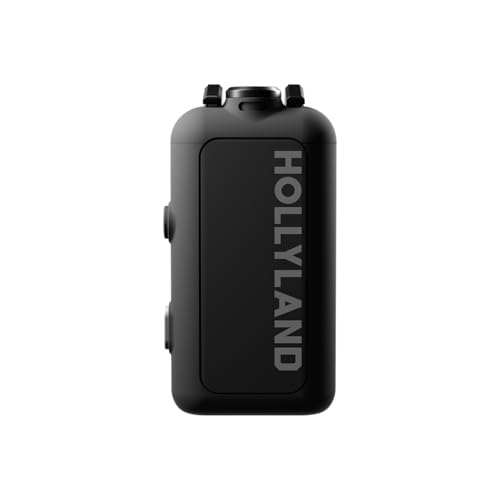
Hollyland Lark MAX 2 Ultimate Combo Wireless Mic System
A two-person wireless lav kit with open-ear monitoring earphones and a charging case, built for creators who shoot on the move.
Product information
Our review: 4.5 out of 5
Product links
— most complete box
Hollyland Lark MAX 2 Ultimate Combo Wireless Mic System
A two-person wireless lav kit with open-ear monitoring earphones and a charging case, built for creators who shoot on the move.
Product information
Our review: 4.5 out of 5
Product links
The Max 2 answers the M3's biggest gap with 32-bit float recording inside the transmitter, plus the deepest accessory box in this guide: two transmitters, receiver, phone adapters, wired lavaliers, and wireless monitoring earbuds at a Flagship price. Noise reduction adjusts in decibel steps instead of a blunt on-off switch, so you can dial 10 dB for street ambience instead of crushing it. PetaPixel's July 2026 test ranked it with the internal-recording tier alongside the Rode Pro and Mic 3, with a range that held to 350-plus feet in the open.
Pro: everything arrives in one purchase — no extra cables or mounts to hunt down. Con: highs roll off a touch and strong noise reduction pumps audibly, so leave it on the light setting. Skip it if you only ever record one voice to one camera; the M3 kit does that job for a third of the money. Prices checked November 2026.
Rode VideoMic NTG
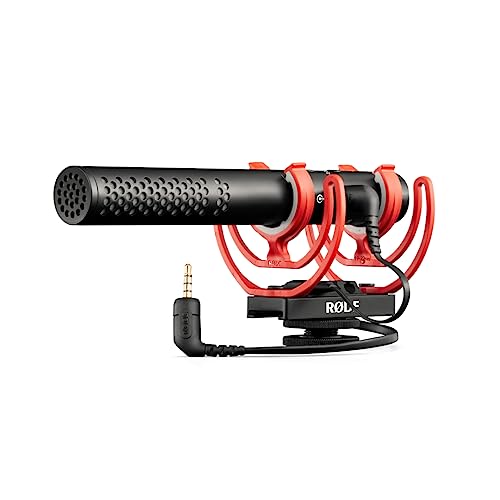
Rode VideoMic NTG Camera-Mount Shotgun Microphone Black
A camera-mount shotgun mic that works with cameras, phones and computers, with a built-in USB output for desk recording.
Product information
Our review: 4.5 out of 5
Product links
— best on-camera shotgun
Rode VideoMic NTG Camera-Mount Shotgun Microphone Black
A camera-mount shotgun mic that works with cameras, phones and computers, with a built-in USB output for desk recording.
Product information
Our review: 4.5 out of 5
Product links
Ninety-four grams and 30+ hours from one USB-C charge. The NTG's supercardioid capsule stays flat from 35 Hz to 18 kHz, and Rode's infinitely variable gain plus safety channel mean a sudden siren lands on the backup track instead of ruining the take. It auto-senses 3.5mm TRS or TRRS, so it jumps between your mirrorless body and your phone without adapters, and the USB-C port turns it into a 48 kHz desk mic for voiceovers. At 171 mm long it stays out of wide-angle frames where stubbier mics creep in. A Mid-Tier price. The variable gain dial covers that setup without menus.
Pro: one mic covering camera, phone, and computer duty is rare at this price. Con: it still hears the room — untreated kitchens and echoey halls need a lavalier instead. Skip it if your videos are all talking heads in bad rooms; buy the M3 and clip it on. Prices checked November 2026.
Sennheiser MKE 400

SENNHEISER MKE 400 Directional On-Camera Shotgun Microphone
A compact super-cardioid shotgun mic that picks up the sound in front of your lens and tends to ignore the rest.
Product information
Our review: 4.5 out of 5
Product links
— longest battery, simplest life
SENNHEISER MKE 400 Directional On-Camera Shotgun Microphone
A compact super-cardioid shotgun mic that picks up the sound in front of your lens and tends to ignore the rest.
Product information
Our review: 4.5 out of 5
Product links
One hundred hours from two AAA batteries. That number ends the battery-anxiety conversation: the 93.5-gram MKE 400 runs a full season of weekend shoots on one pair of cells, with a low-battery warning at 3 hours remaining and auto power that follows your camera so it never drains in the bag. The supercardioid pattern covers 50 Hz to 20 kHz with a 132 dB max SPL, a 3-step gain switch, switchable low-cut, and a headphone jack with volume control for live monitoring — a feature neither Rode shotgun here includes. A Mid-Tier price. The screw-lock 3.5mm jack keeps the cable seated on the move.
Pro: monitoring plus AAA power makes it the most field-proof pick here. Con: no USB output and no digital features, so computer recording needs an interface. Skip it if you want one mic for camera and desk; the NTG's USB-C wins there. Prices checked November 2026.
What to look for in a vlogging microphone
- Backup recording: 32-bit float internal storage (32GB ≈ 40 hours) rescues clipped takes; no-backup mics lose dropouts forever.
- Transmitter weight: 9–16 g disappears on clothing; 35 g pulls on light fabric and shows on camera.
- Real battery per shoot: 7–10 hours per transmitter covers a day; 30+ hours (NTG) or 100+ hours (MKE 400) covers a season.
- Link band: dual-band 2.4/5 GHz holds up in crowded venues; single-band 2.4 GHz suffices in parks and streets.
- Phone path: USB-C receiver or direct Bluetooth decides whether you can leave the camera at home.
- Lav socket: a locking 3.5mm input hides the transmitter in a pocket; magnetic-only designs must stay visible.
Frequently asked questions
Do I need 32-bit float as a beginner?
No, but it is cheap insurance once you record outside quiet rooms. Float saves loud surprises from clipping, and three picks here include it. Start with the Lark M3 if every video is a controlled talking head; upgrade when you lose a take to distortion.
Can I use these mics with a phone?
Yes, all five work with phones one way or another. The wireless kits ship USB-C receivers that plug straight into modern phones, the NTG auto-switches its 3.5mm output between camera and mobile wiring, and the MKE 400 includes a TRRS cable for phones in the box.
Lavalier or shotgun for street vlogs?
Lavalier for streets. Traffic and wind punish on-camera shotguns because the mic sits far from your mouth, while a 9-gram transmitter at your collar keeps voice 20 dB above the noise. Bring the shotgun for markets and events where you point at things all day.
How much should I spend on a first vlogging mic?
Budget to Mid-Tier covers the sweet spot. The Lark M3 kit at a Budget price handles two-person videos, and the DJI Mic 3 at a Mid-Tier price adds float backup and timecode. Above the Flagship tier you pay for broadcast workflow, not better sound for YouTube.
Will the DJI Mic 3 work without a DJI camera?
Yes, it records to any camera over 3.5mm or USB-C and to phones over USB-C or Bluetooth. DJI owners get extras like direct OsmoAudio pairing without a receiver, but the core mic, float backup, and 8-hour battery work everywhere.
Related guides and categories
Compare with our wildlife lens companion guide, browse the full camera microphone shelf, or check the DJI Mic 3 listing and the Lark M3 listing for current prices. Prices checked November 2026.


